
Every few months someone declares SEO dead.
This time they might have a point — or at least a better argument than usual.
Google AI Overviews are now showing up in 13% of all searches. Position 1 click through rates have dropped. Informational traffic is down 30-40% on affected queries.
So is SEO actually dead?
No. But something real is changing and most of the advice out there is either panicking or dismissing it. Neither is useful.
Here is what is actually happening and what it means for your site.
Check where you rank right now
See your exact position and whether AI Overviews are affecting your keywords.
Open resourceWhat Google AI Overviews Actually Are
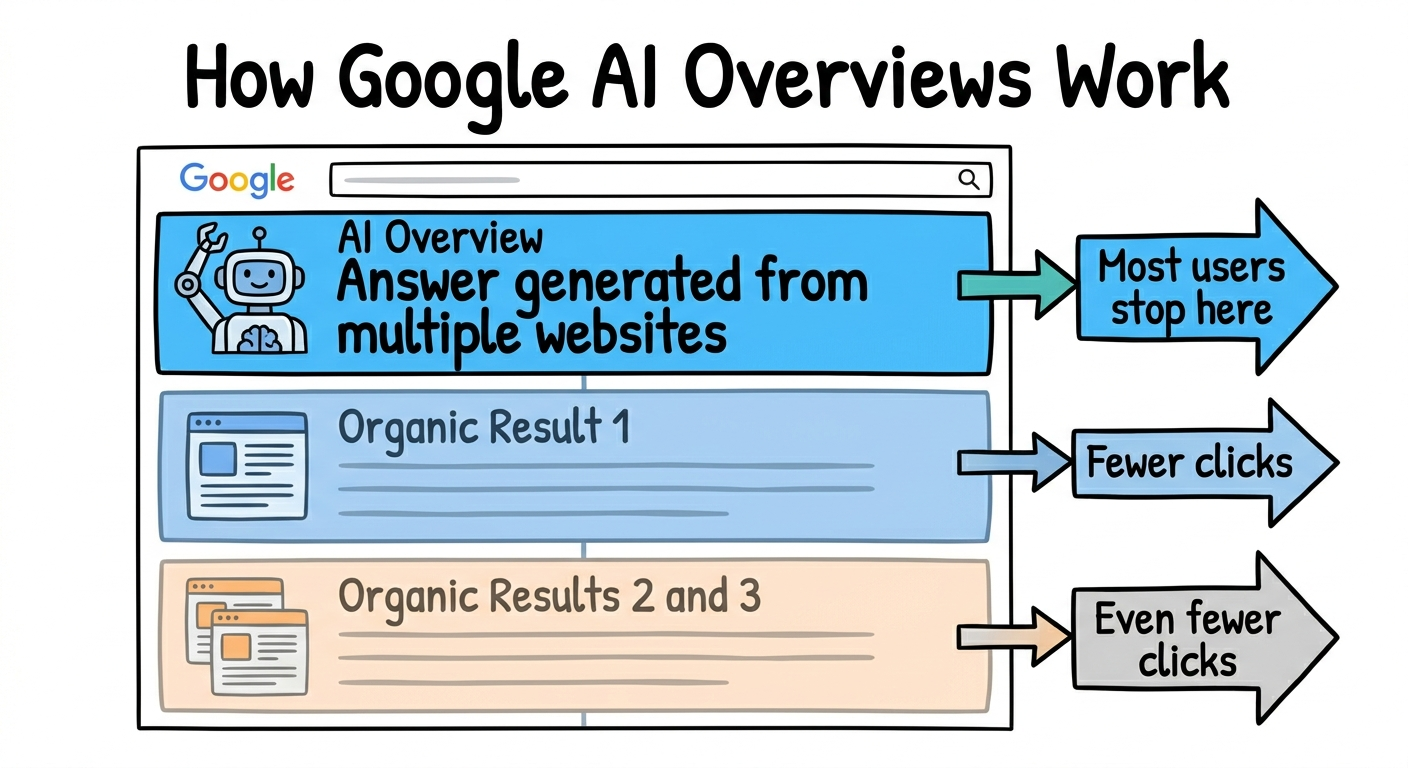
When you search something on Google you may now see an AI generated summary at the top of the page before any organic results. Google calls these AI Overviews.
They pull information from websites, summarise it, and show the answer directly in search results. The user gets their answer without clicking through to any website.
This is the zero click problem. And it is real.
What the Data Actually Says
AI Overviews now appear in 13% of all Google searches. That number is growing and projected to reach 20-25% by end of 2026.
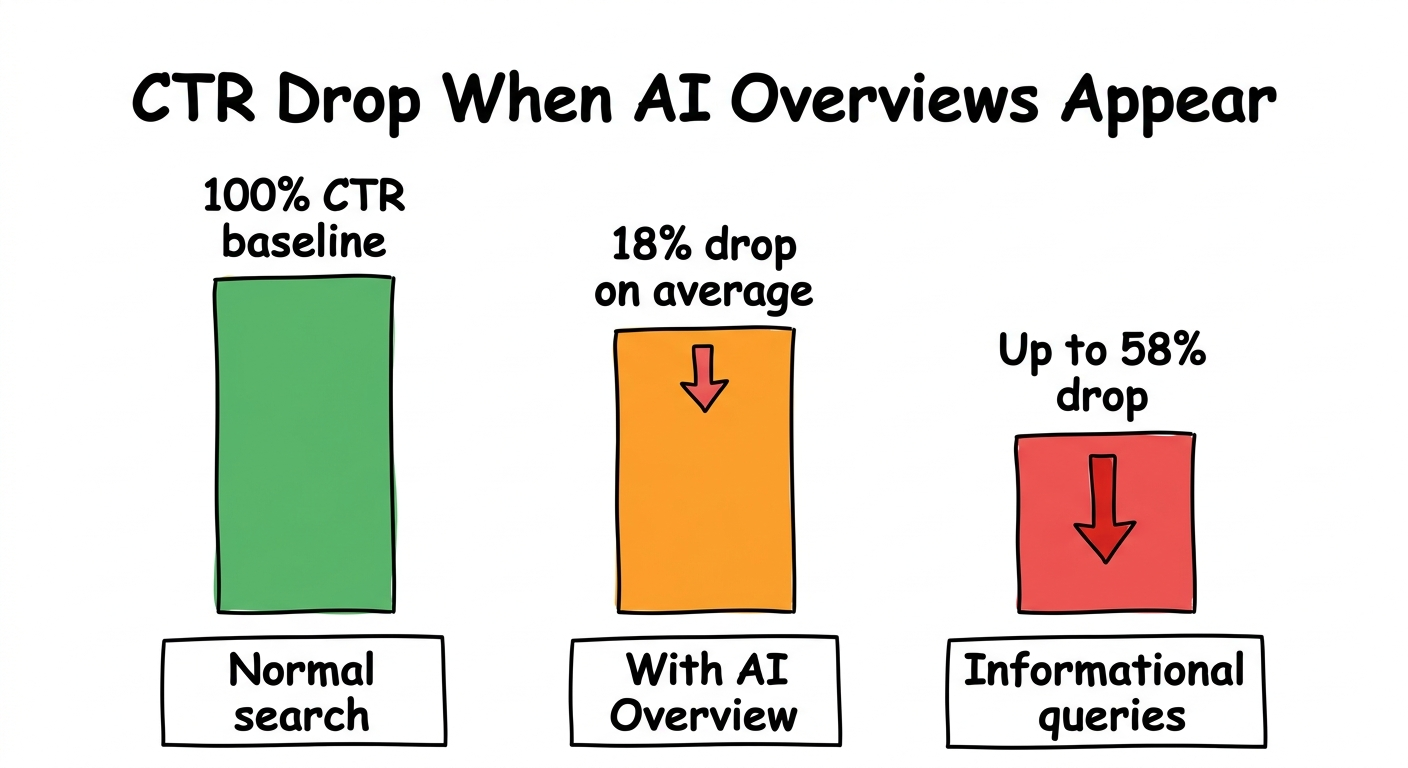
When an AI Overview appears above your result your click through rate drops significantly. Studies show anywhere from 18% to 58% depending on the type of query.
Informational queries are hit hardest. If someone searches "what is keyword cannibalization" and Google shows an AI answer they may never click through to your article.
That part is true and worth taking seriously.
What the Panic Merchants Are Getting Wrong
Here is what the SEO is dead crowd is missing.
Sites that get cited inside AI Overviews see 35% more clicks than they would from a standard position one result. Being cited in an AI Overview is now more valuable than ranking number one below it.
So the question is not whether SEO is dead. The question is whether your site is the kind of site Google wants to cite in AI answers or ignore.
That distinction is everything.
Check your site visibility score
See exactly how Google views your site and whether it is citation worthy.
Open resourceWhich Sites Are Winning and Which Are Losing
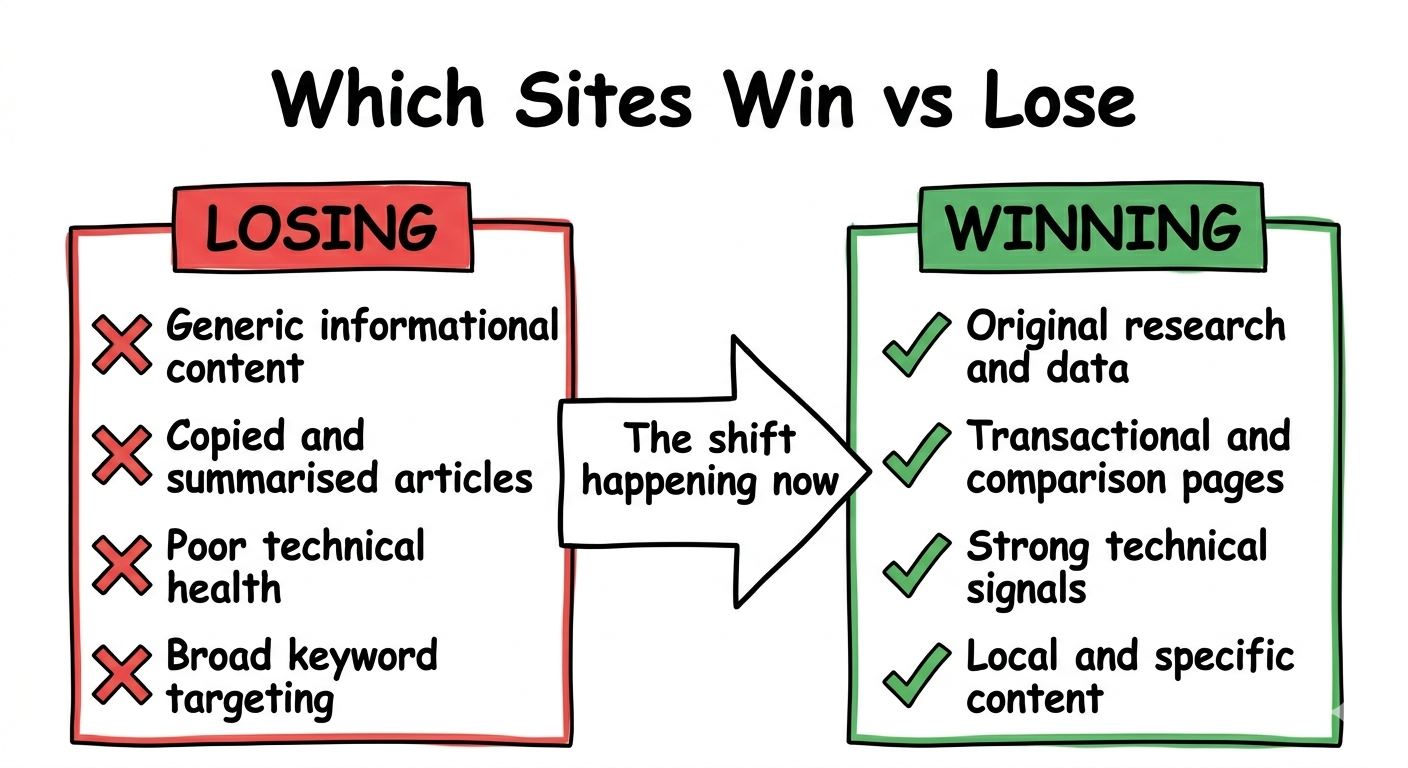
Sites getting crushed:
- Thin content farms with no original research
- Sites that copied and summarised other articles
- Pages targeting broad informational keywords
- Sites with poor technical health
Sites holding steady or growing:
- Sites with genuine expertise and original data
- Transactional pages — buy, compare, find, book
- Local business pages — near me, in city
- Brand searches
- Sites with strong technical signals Google trusts
What Actually Changed and What Did Not
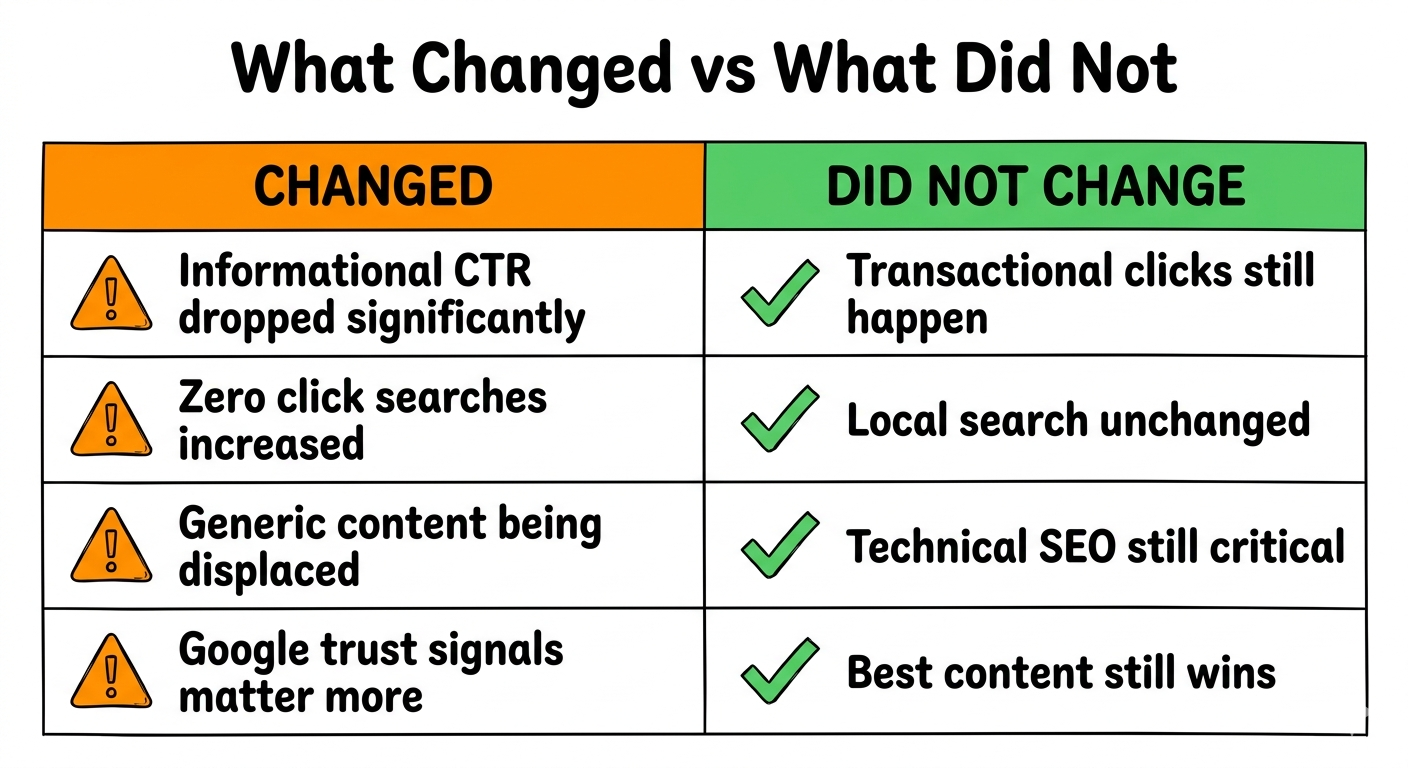
What changed:
- Informational zero click queries increased
- Position one CTR is lower when AI Overviews appear
- Generic content is being displaced faster
- Google needs to trust your site more deeply
What did not change:
- Transactional intent still sends clicks
- Local search still sends people to businesses
- Technical SEO still determines crawlability
- Best signals still rank and get cited
- Keyword cannibalization still splits authority
What This Means for Your Site Practically
If your site ranks for broad informational keywords like "what is SEO" or "how does email marketing work" you will feel this. Google is answering these directly now.
If your site ranks for specific, transactional, or local keywords like "best SEO tool for small business India" or "digital marketing agency Ghaziabad" you are largely unaffected.
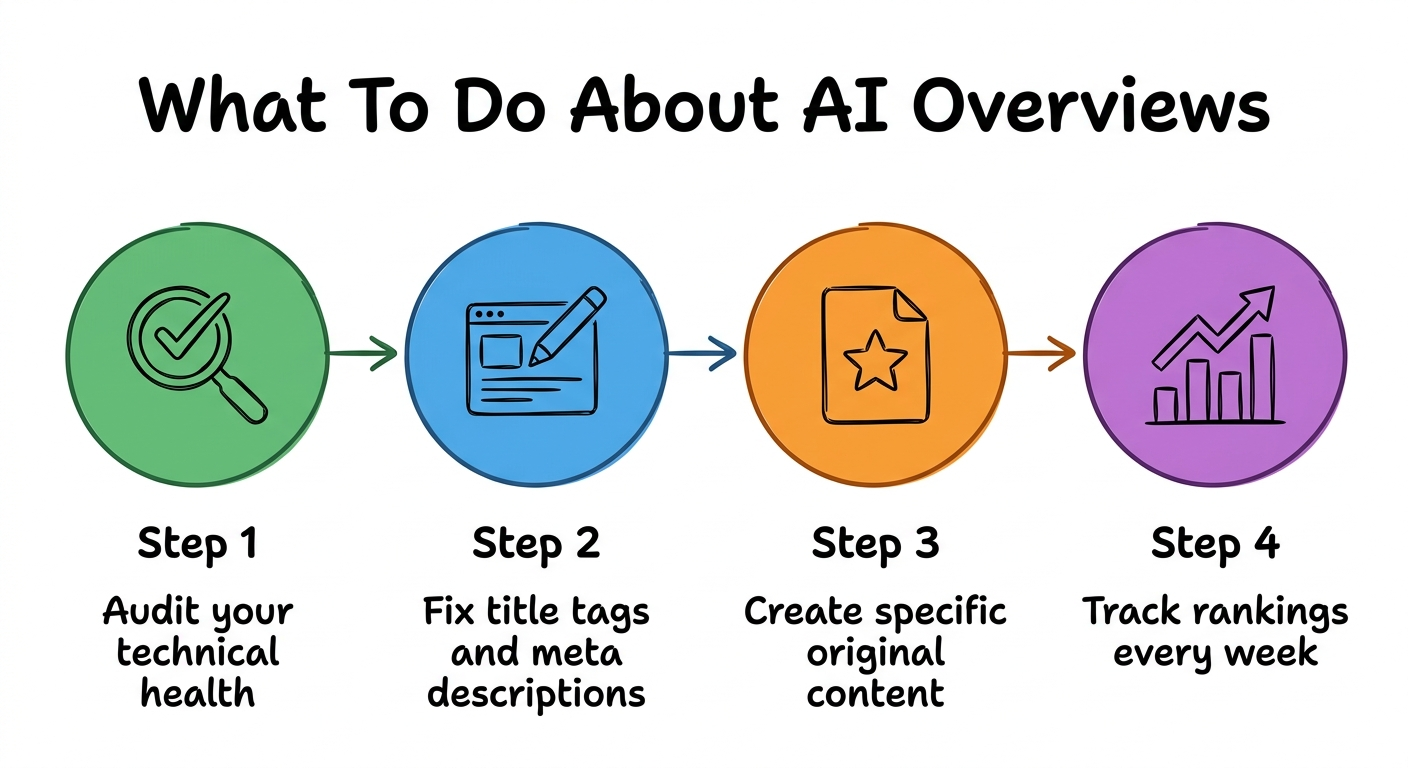
The practical moves:
Move away from generic informational content toward specific data driven original content that AI cannot easily summarise. Include your own research, your own data, your own perspective.
Move toward transactional and comparison content. These still send clicks because users need to make a decision not just get an answer.
Fix your technical signals. If Google does not trust your site enough to crawl it efficiently it will never cite you in AI answers. Title tags, meta descriptions, heading structure, page speed, sitemap — these matter more now not less.
Track what is actually happening to your rankings weekly. The sites that adapt fastest are the ones monitoring closely enough to notice changes early.
Track your rankings weekly
See exactly which keywords are affected and which are holding steady.
Open resourceThe Honest Bottom Line
SEO is not dead. But the version of SEO that worked three years ago is becoming less effective.
The sites that will win in the AI Overview era are the ones with:
- Strong technical foundations
- Original and specific content
- Clear expertise signals
- Consistent tracking and adaptation
The sites that will lose are the ones doing what worked in 2020 and wondering why traffic is declining.
The fundamentals did not die. They got stricter.
Most Indian websites we have audited score below 60 out of 100 on visibility. These sites are not losing to AI Overviews — they are losing to basic technical issues that were always holding them back.
Fix the basics first. Then worry about AI Overviews.
Run a free visibility audit
See your score, your issues, and exactly what to fix with copy paste code.
Open resource